Waves and Oscillations

Waves & Oscillations | Advanced Physics

Advanced Physics → Fields, Waves & Optics → Waves & Oscillations
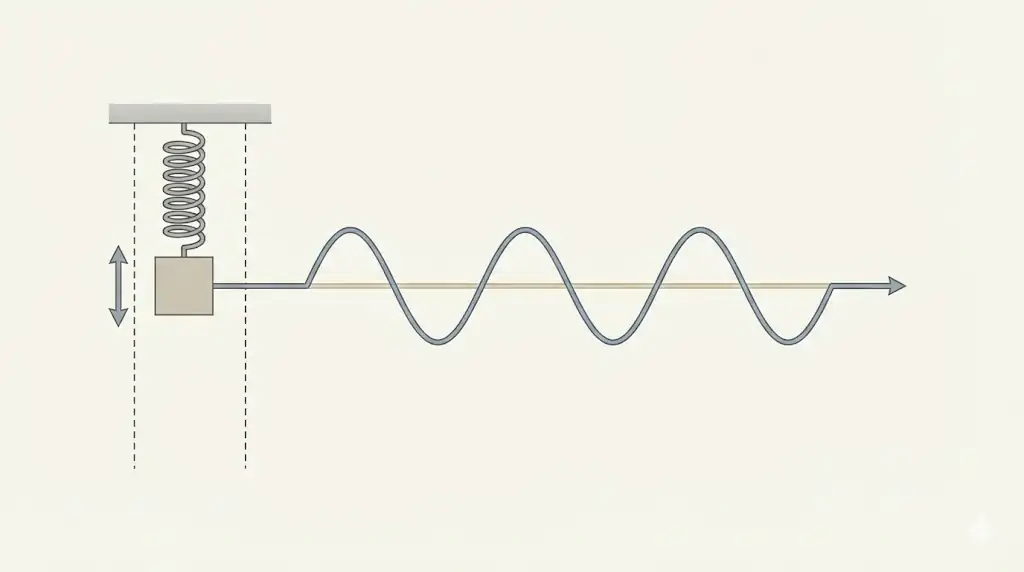
Oscillatory motion transitioning into wave propagation
Oscillations form the foundation of wave motion across physics.
Core idea
Oscillations describe localized motion; waves describe how oscillations propagate through space.

1. What Is Oscillatory Motion?

An oscillation is a repeated motion about an equilibrium position caused by a restoring influence. The defining feature is not periodicity alone, but the tendency of the system to return to equilibrium.
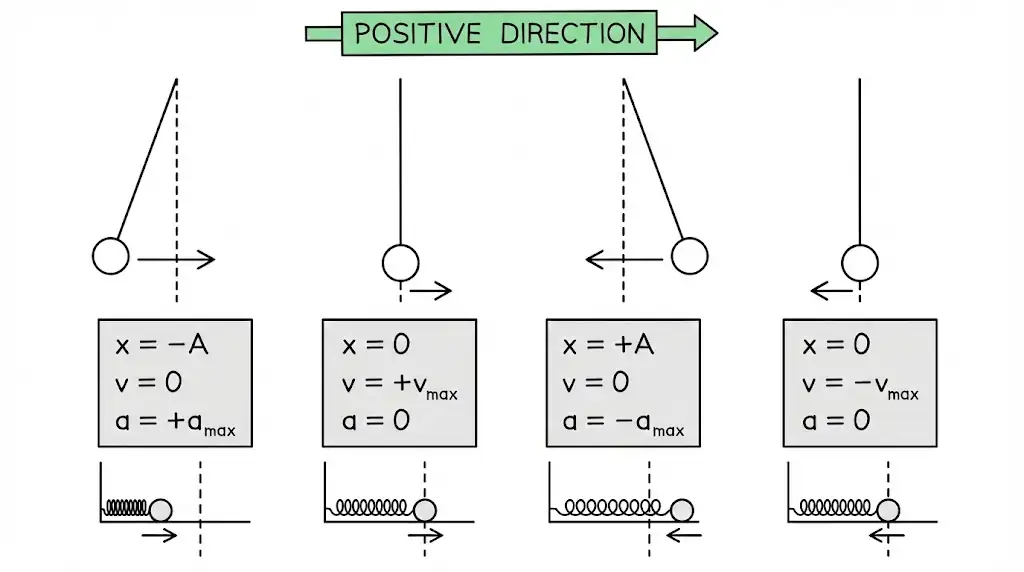
One full cycle of simple harmonic motion
Simple harmonic motion is the most fundamental oscillatory motion.

2. Restoring Forces and Stability

Oscillations arise only when a restoring force acts toward equilibrium. This requirement connects oscillations to stability and energy minima.

3. Energy in Oscillatory Systems

During oscillation, energy continuously transforms between kinetic and potential forms, while total mechanical energy remains constant in ideal systems.
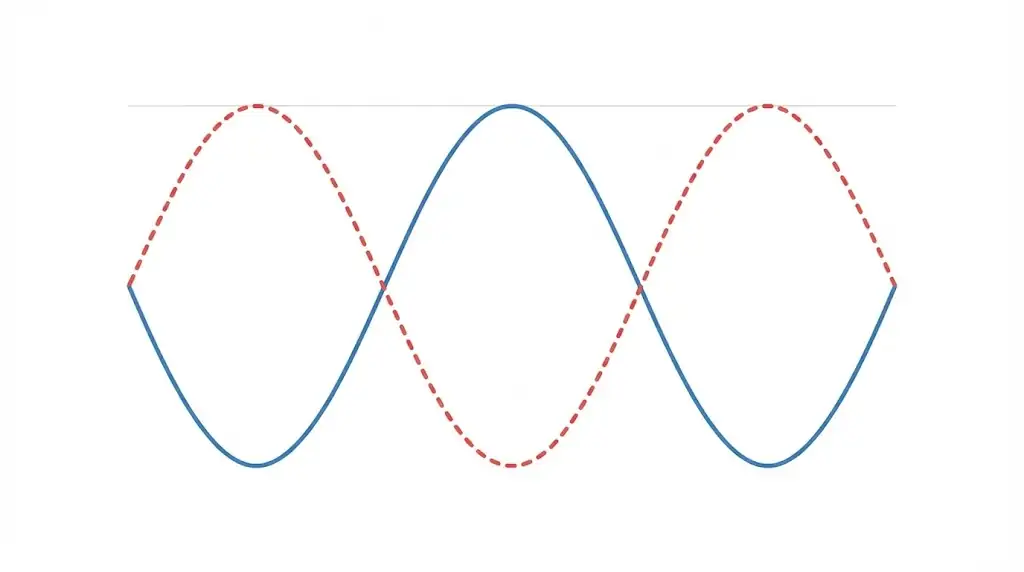
Energy exchange during oscillation
Kinetic and potential energies exchange while total energy remains constant.

4. From Oscillations to Waves

When oscillations are coupled across space, disturbances propagate. This propagation of oscillation is called a wave.
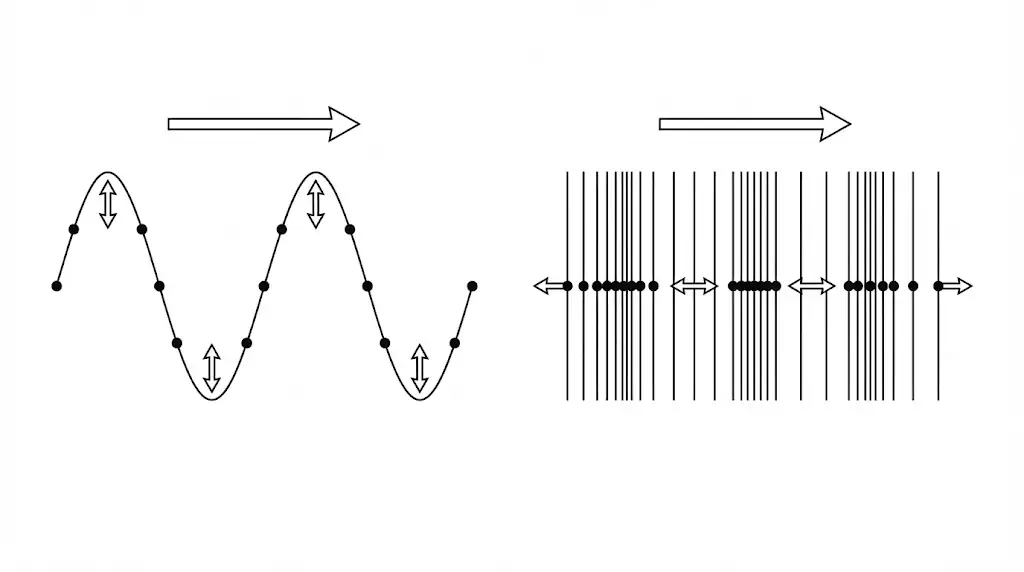
Transverse and longitudinal waves
The direction of oscillation distinguishes transverse and longitudinal waves.

5. Describing Waves

Waves are described using wavelength, frequency, amplitude, and phase. These quantities encode both spatial and temporal behavior.
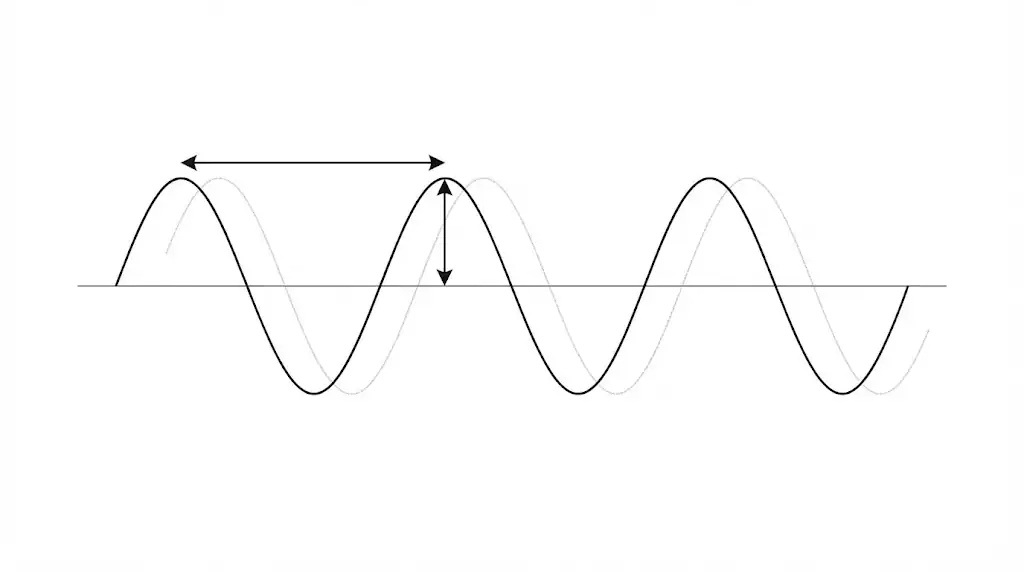
Wave parameters diagram
Wave parameters describe both motion and structure.

6. Superposition Principle

When waves overlap, their effects add. This principle explains interference, beats, and complex wave patterns.
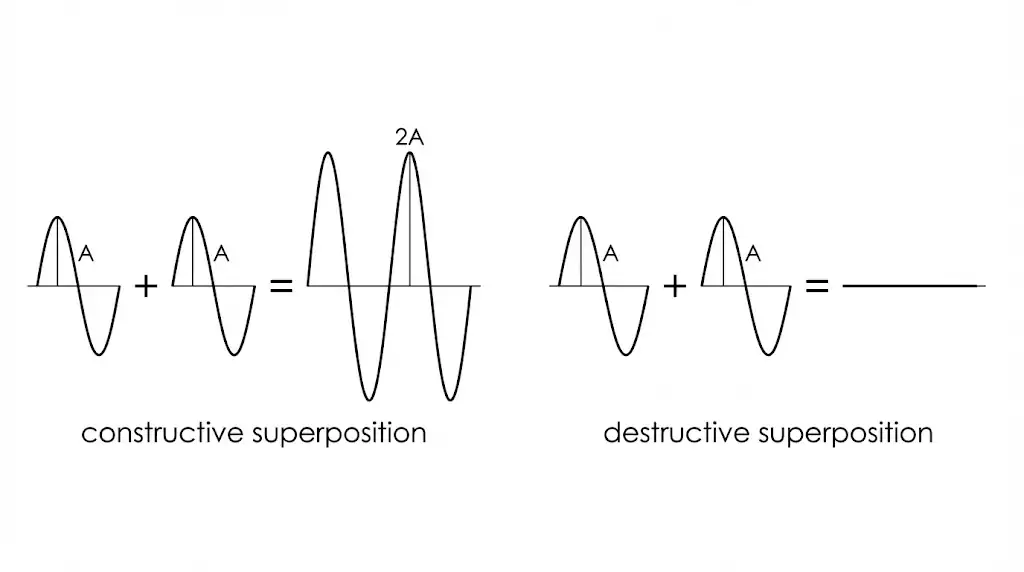
Wave superposition visualization
Superposition allows waves to combine without permanent distortion.

7. Standing Waves and Resonance

Standing waves arise when waves reflect and interfere with themselves. Resonance occurs when driving frequency matches natural frequencies.
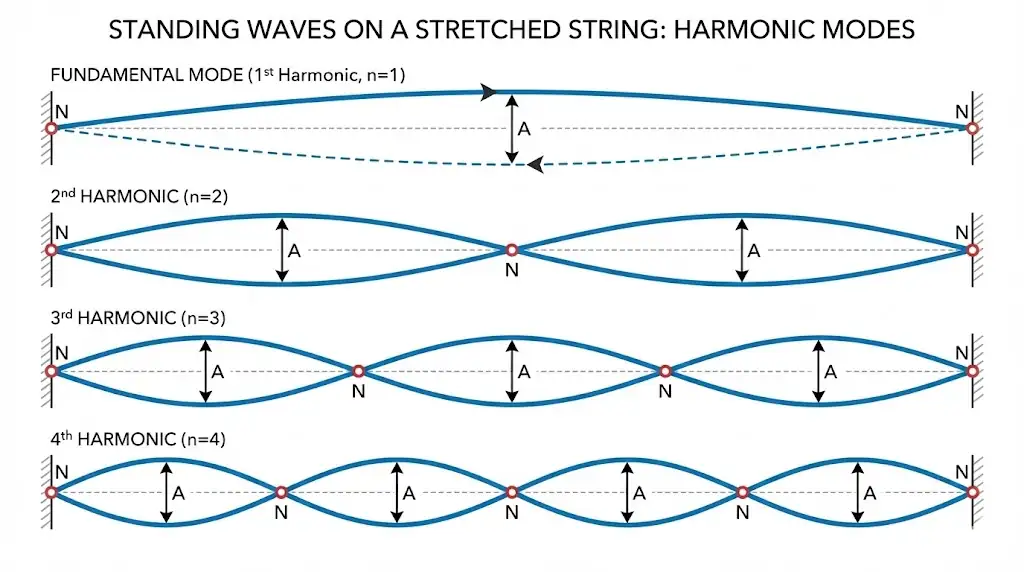
Standing waves with nodes and antinodes
Standing waves reveal discrete natural modes of oscillation.

Practice Problems

Conceptual

Why is a restoring force essential for oscillations?
Solution Without a restoring force, the system cannot return toward equilibrium.
Can energy propagate without matter transport?
Solution Yes. Waves transfer energy without transporting matter.

Physical Reasoning

Why do standing waves form only at specific frequencies?
Solution Boundary conditions allow only certain wavelengths to persist.
Why does resonance increase amplitude dramatically?
Solution Energy input matches natural oscillation frequency, maximizing energy transfer.
Advanced Physics → Waves & Oscillations
© PhysicsQandA