
Advanced Physics → Fields, Waves & Optics → Advanced Optics
Core idea
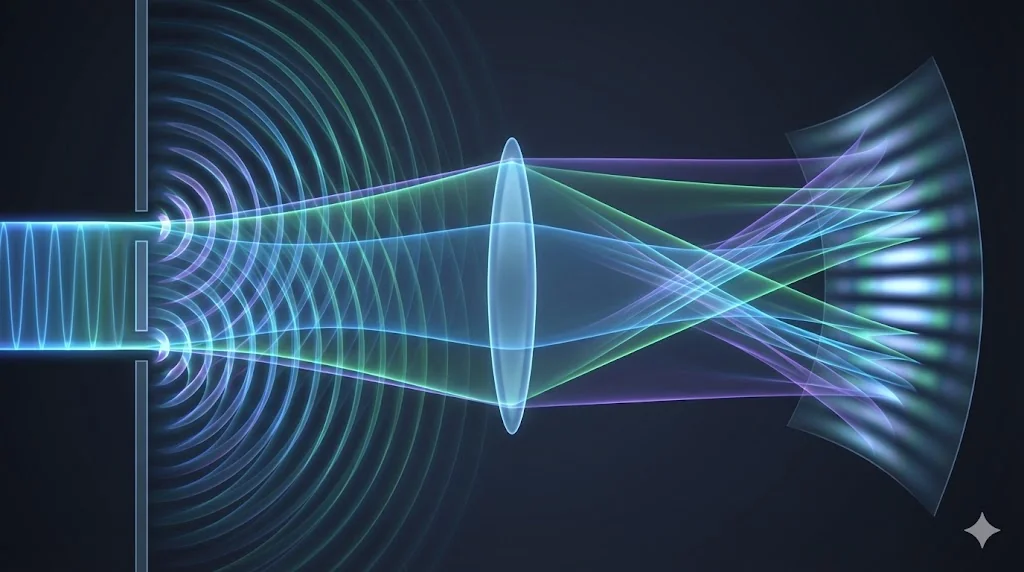
Advanced optics begins where ray optics fails and wave behavior dominates.
Advanced optics begins where ray optics fails and wave behavior dominates.
1. Why Ray Optics Is Not Enough
Geometrical optics explains reflection and refraction, but it cannot explain interference, diffraction, or polarization.
2. Interference of Light
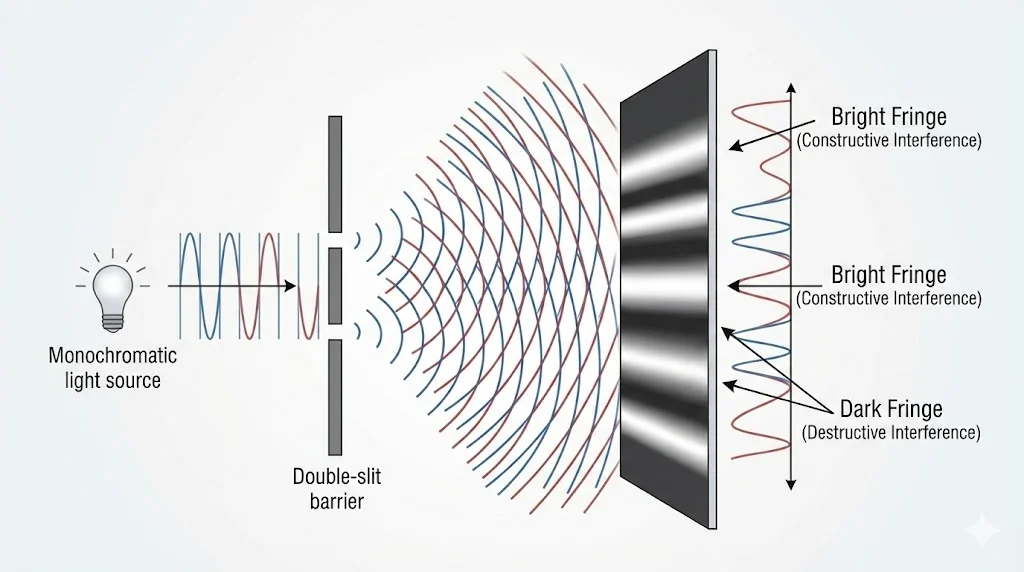
Interference occurs when coherent light waves superpose, producing regions of enhancement and cancellation.
3. Diffraction
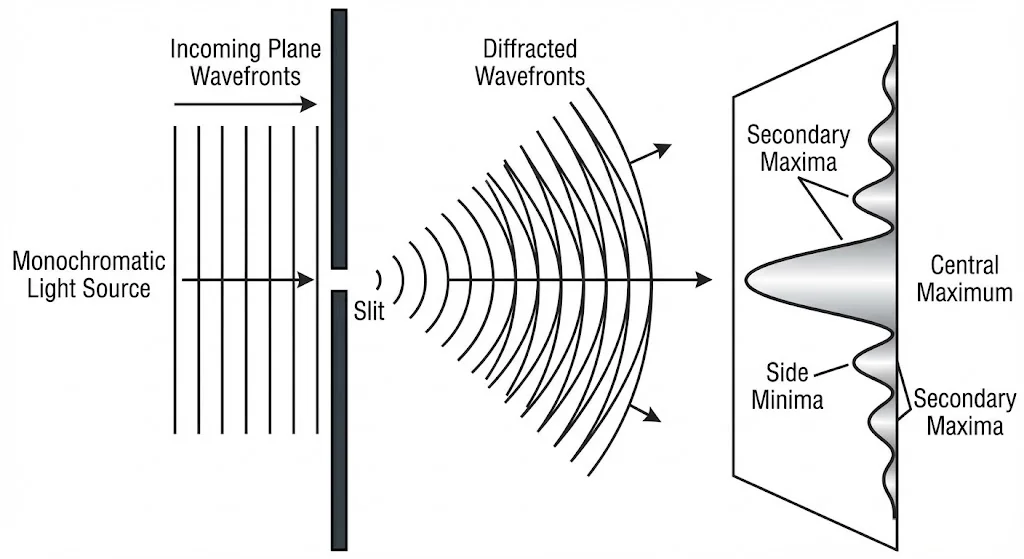
Diffraction reveals the wave nature of light when it encounters apertures comparable to its wavelength.
4. Huygens Principle
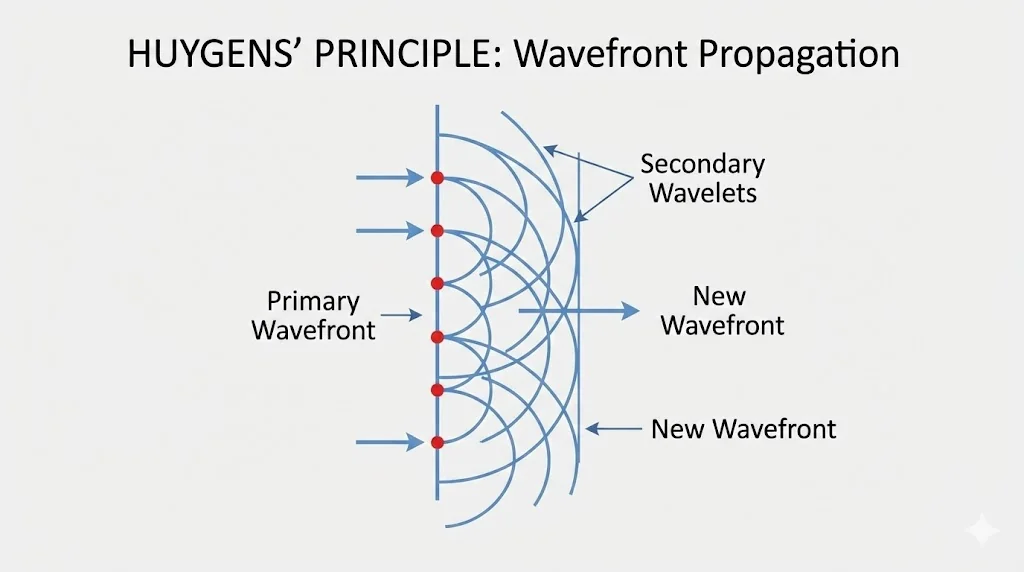
Every point on a wavefront acts as a source of secondary wavelets. This principle explains reflection, refraction, and diffraction.
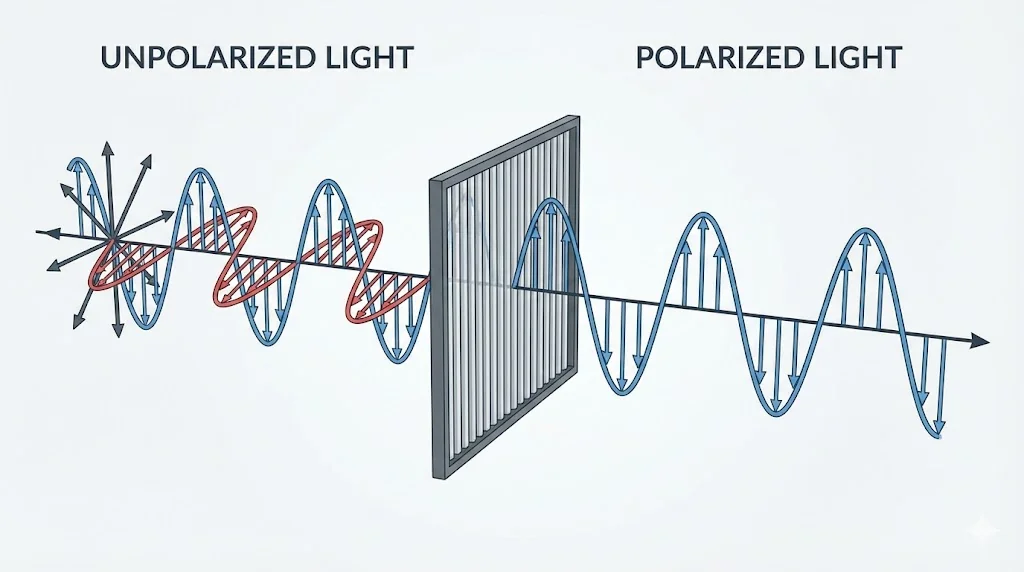
5. Polarization
Polarization reveals the transverse nature of light. Only transverse waves can be polarized.
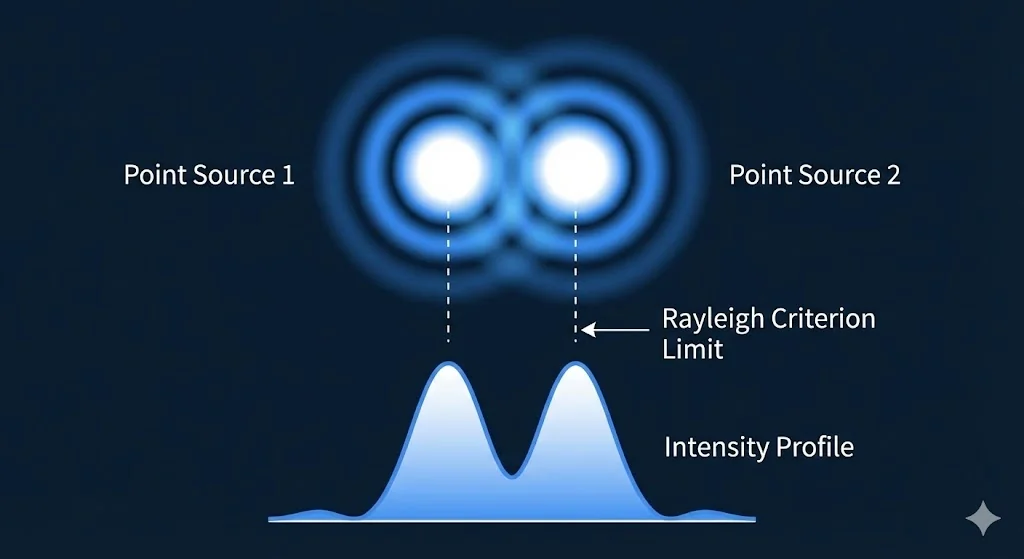
6. Resolution and Diffraction Limit
No optical instrument can resolve details smaller than a fundamental diffraction limit.
7. Why Advanced Optics Matters
- Explains limits of microscopes and telescopes
- Foundation of lasers and photonics
- Links optics with electromagnetism and quantum physics
Practice Problems
Conceptual
Why does diffraction occur only when aperture size is comparable to wavelength?
Solution
Wave spreading becomes significant only at comparable length scales.
Why can sound waves be polarized?
Solution
They cannot; sound waves are longitudinal.Physical Reasoning
Why does interference require coherence?
Solution
Stable phase difference is necessary for consistent superposition.
Why does higher aperture improve resolution?