Electromagnetic Fields

Electromagnetic Fields | Advanced Physics

Advanced Physics → Fields, Waves & Optics → Electromagnetic Fields
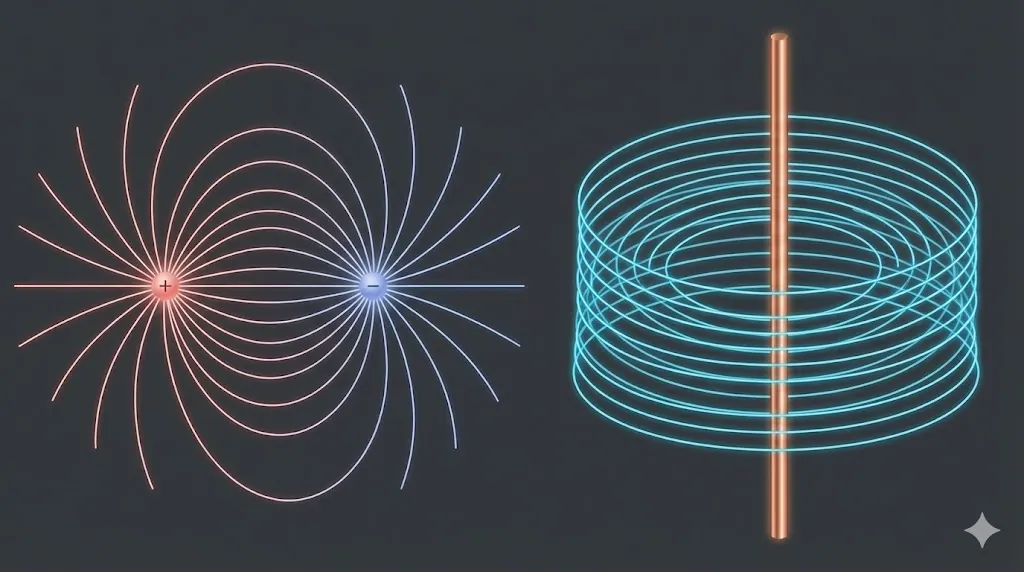
Electric and magnetic field visualization
Electric and magnetic fields are two manifestations of a single electromagnetic interaction.
Central idea
Electromagnetic fields describe how charges interact across space without direct contact.

1. What Is a Field?

A field assigns a physical quantity to every point in space. In electromagnetism, fields replace the idea of action at a distance.

2. Electric Fields

An electric field exists around every electric charge. It determines the force experienced by other charges placed in that region.
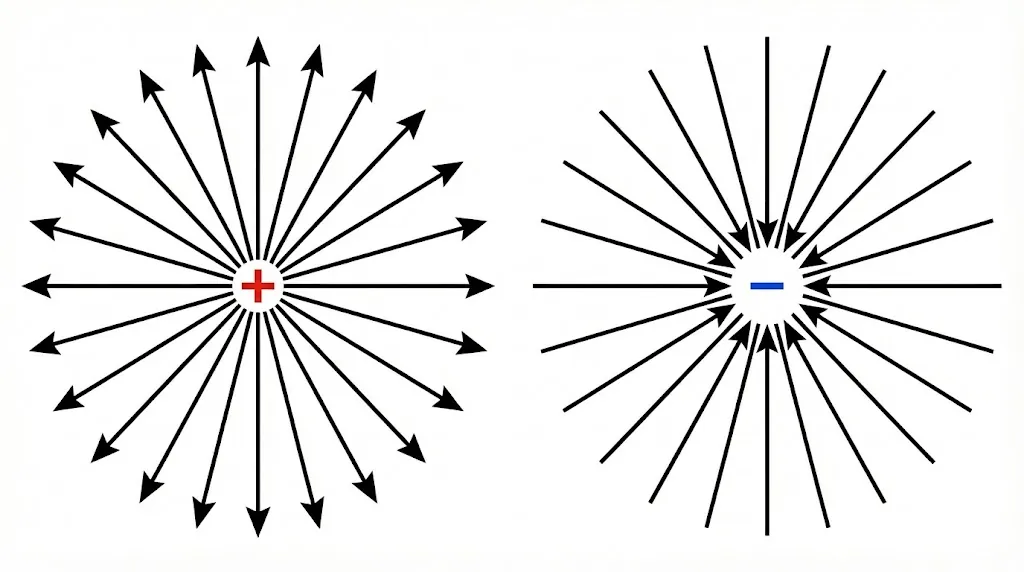
Electric field lines around charges
Electric field lines visualize how forces act on charges in space.

3. Magnetic Fields

Magnetic fields arise due to moving charges and electric currents. They exert forces only on moving charges.
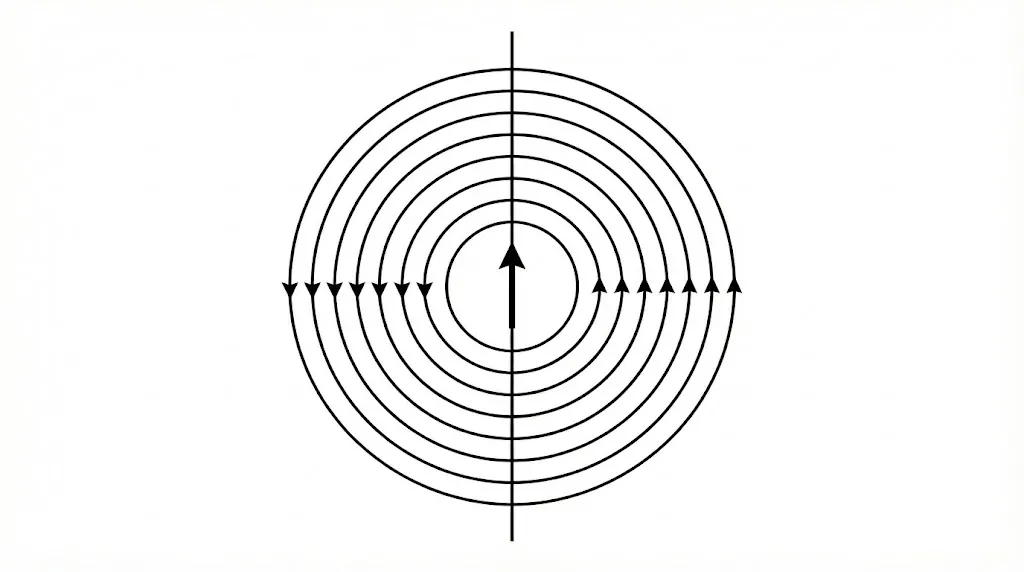
Magnetic field around current carrying wire
Currents generate magnetic fields with circular field lines.

4. Force on a Moving Charge

The force experienced by a charge moving in electric and magnetic fields depends on its velocity and the field configuration.

The electric part of the force can change the speed of the charge, while the magnetic part only bends its path because it is always perpendicular to the velocity.
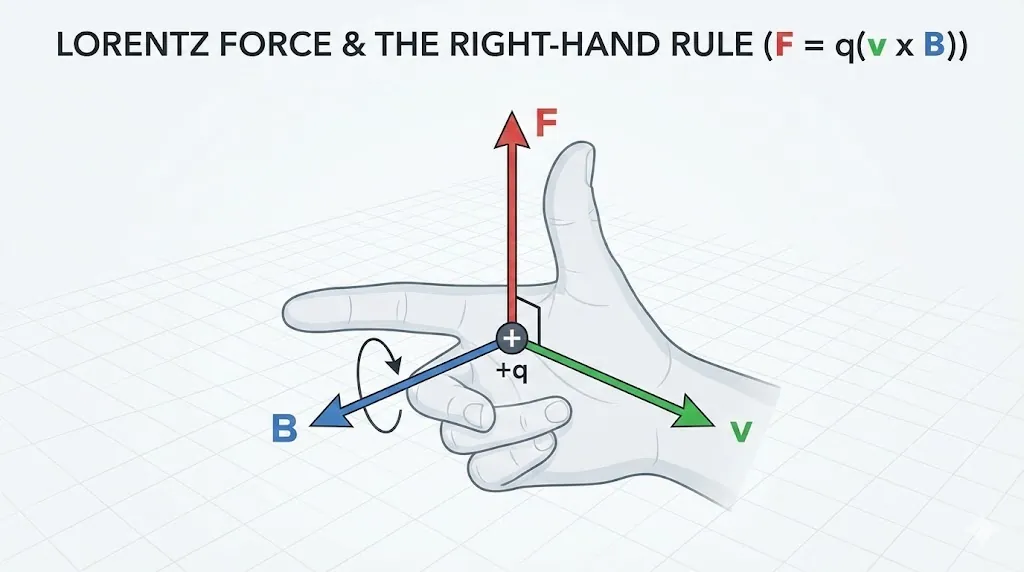
Lorentz force vector diagram
The Lorentz force acts perpendicular to velocity and magnetic field.

5. Motion in Magnetic Fields

Magnetic forces change the direction of motion but not the speed. This leads to circular or helical trajectories.
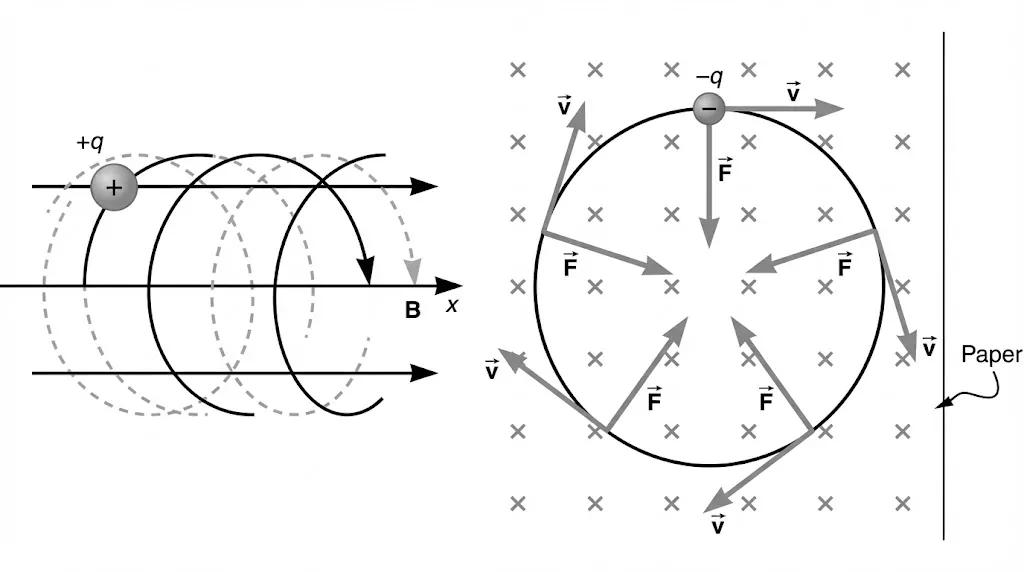
Charged particle motion in magnetic field
Magnetic fields curve particle trajectories without changing kinetic energy.

6. Unification: Electromagnetic Fields

Electric and magnetic fields are not separate entities. They transform into each other depending on the observer’s frame of reference.
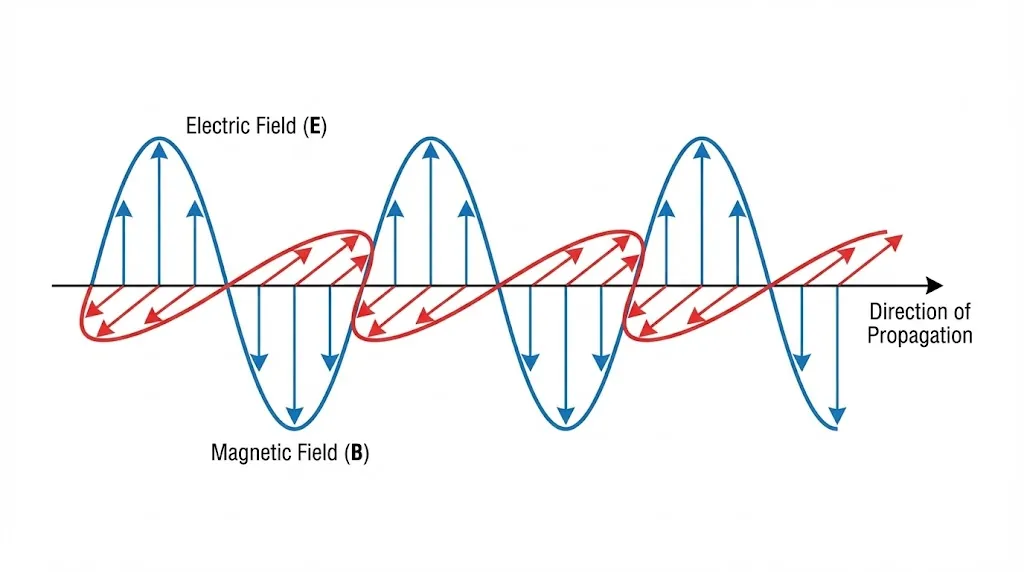
Electromagnetic wave with electric and magnetic fields
Oscillating electric and magnetic fields propagate as electromagnetic waves.

7. Why Electromagnetic Fields Matter

  • They explain light and radiation
  • They govern electronics and communication
  • They unify electricity, magnetism, and optics

Practice Problems

Conceptual

Why can magnetic fields not do work on charges?
Solution The magnetic force is always perpendicular to velocity.
Why are fields preferred over force-at-a-distance?
Solution Fields provide local, continuous descriptions of interactions.

Physical Reasoning

Why does a charge spiral in combined electric and magnetic fields?
Solution Electric field changes speed while magnetic field curves the path.
Why does light not require a medium?
Solution Electromagnetic waves propagate through self-sustaining fields.
Advanced Physics → Electromagnetic Fields
© PhysicsQandA