

Electric Charges & Fields
NCERT Class 12 Physics • Chapter 1 • Full Notes & Derivations
| Topic | Question Type | Marks (Approx.) |
|---|---|---|
| Field Lines / Properties | MCQ / Assertion | 1 |
| Dipole Fields (Axial & Equatorial) | Short Answer / Derivation | 3 |
| Gauss Law + Applications | Long Answer (Derivations) | 5 |
1. Electric Charge & Coulomb’s Law
Electric charge is an intrinsic property of matter. Like charges repel, unlike charges attract. Benjamin Franklin introduced the convention of positive and negative charges.
- Additivity: Total charge is the scalar sum
 .
- Conservation: Charge is neither created nor destroyed in an isolated system, only transferred.
- Quantisation: , where is an integer and is elementary charge.
 .
 is an integer and
 is elementary charge.


Coulomb’s Law
The electrostatic force between two stationary point charges is along the line joining them, directly proportional to the product of charges and inversely proportional to the square of the separation.


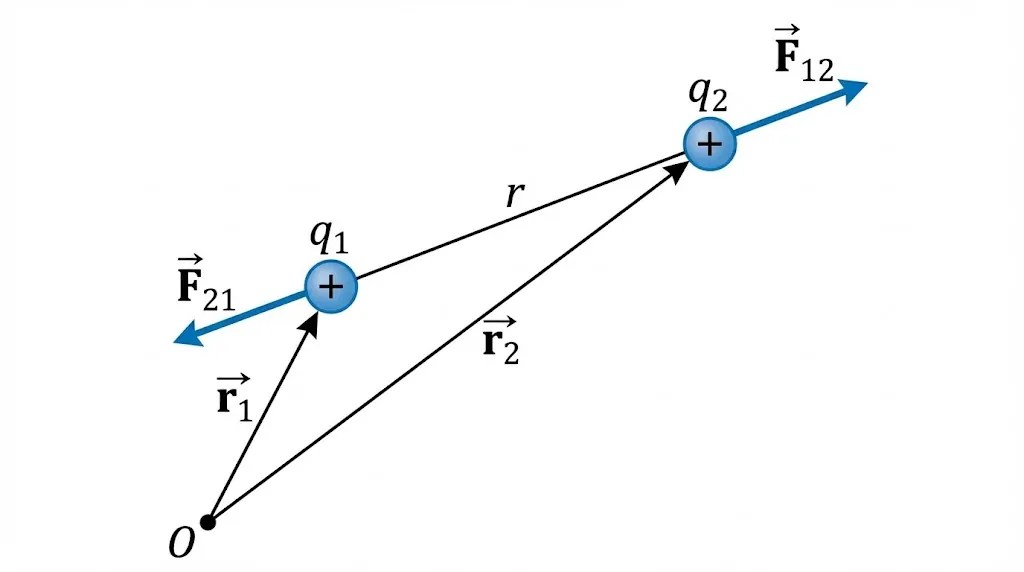
 .
2. Electric Field & Field Lines
The electric field at a point is defined as the force experienced by a unit positive test charge placed at that point, with the source charges undisturbed.

Properties of Electric Field Lines
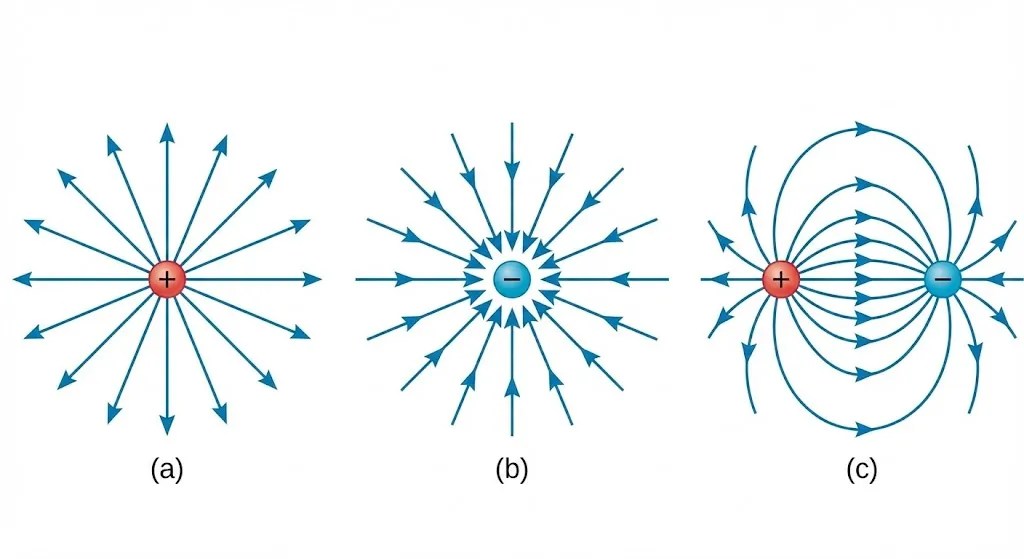
- Start on positive charge and end on negative charge.
- Are continuous curves, with no breaks in charge-free region.
- Never intersect: otherwise, field would have two directions at one point.
- Do not form closed loops in electrostatics (field is conservative).
3. Electric Dipole Derivations
An electric dipole consists of charges  and
 separated by distance
 . Its dipole moment is
 directed from negative to positive charge.
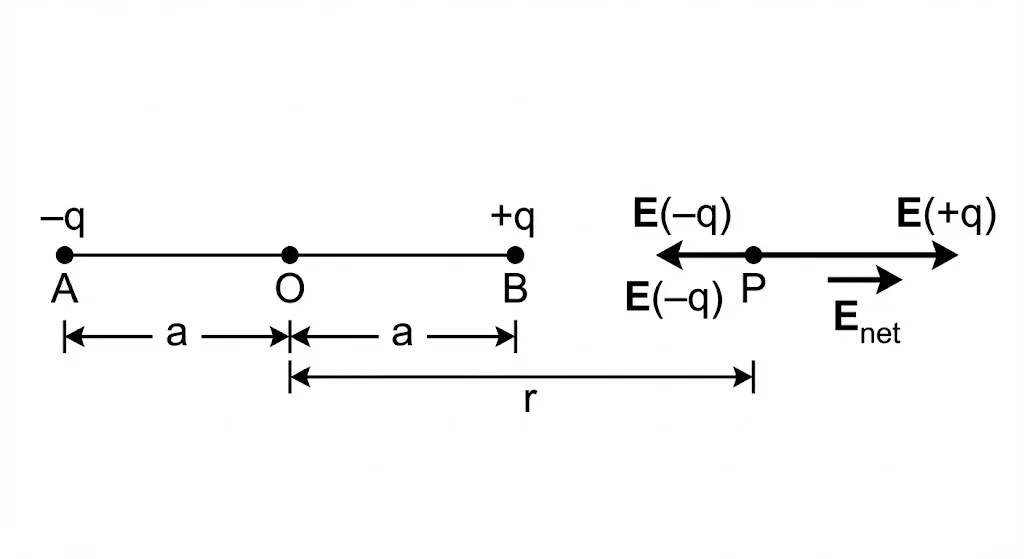
 from the centre on axial line. Distances from charges are
 and
 .
 to ):

 , for
 :

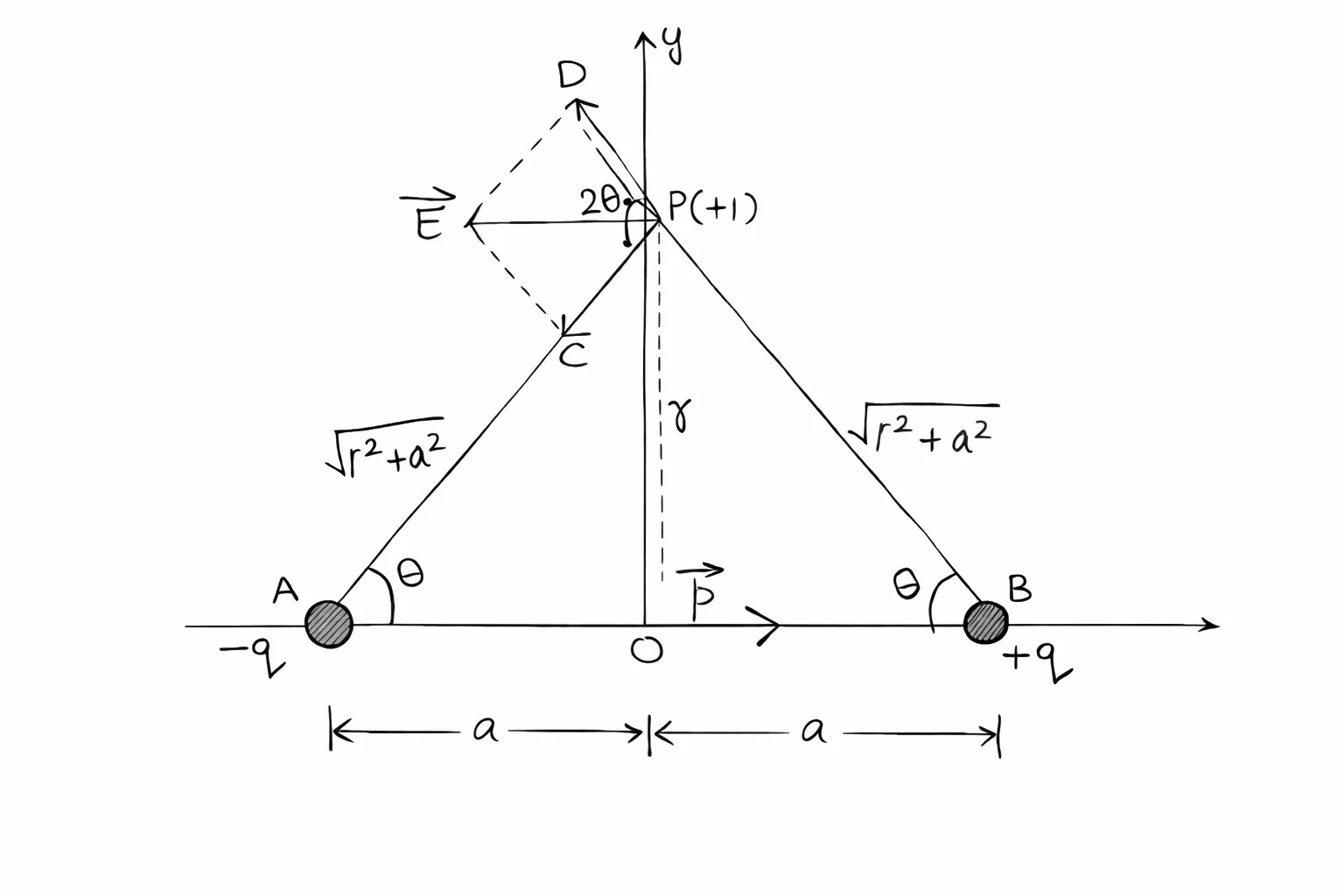
 .
 .

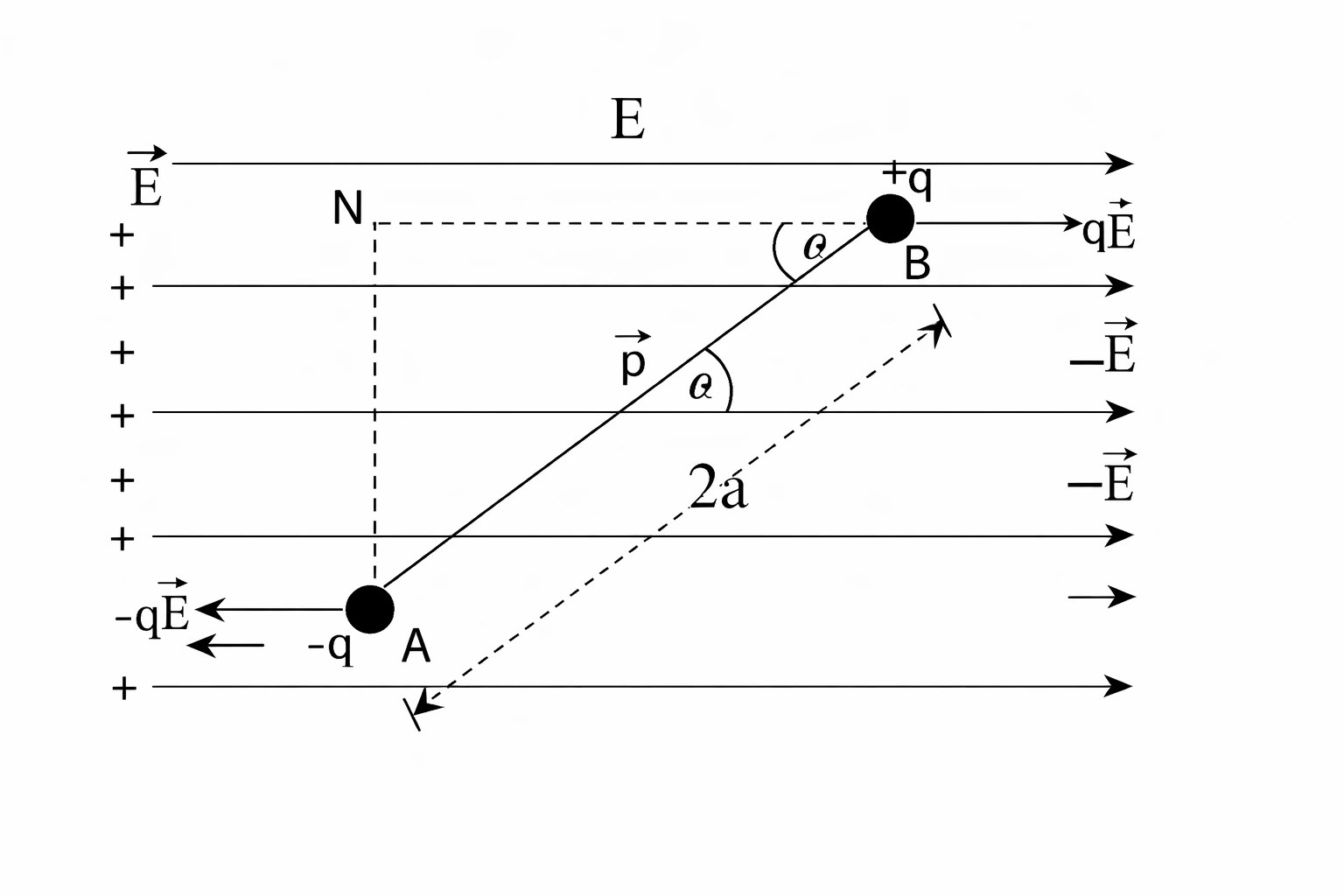
 and
 form a couple.
 .


4. Continuous Charge Distribution
- Linear Density (): Charge per unit length ().
- Surface Density (): Charge per unit area ().
- Volume Density (): Charge per unit volume ().
 ).
 ).
 ): Charge per unit volume (
 ).
5. Electric Flux & Gauss’s Law


 is the net charge enclosed by the surface.
6. Applications of Gauss’s Law
 )
5 Marks
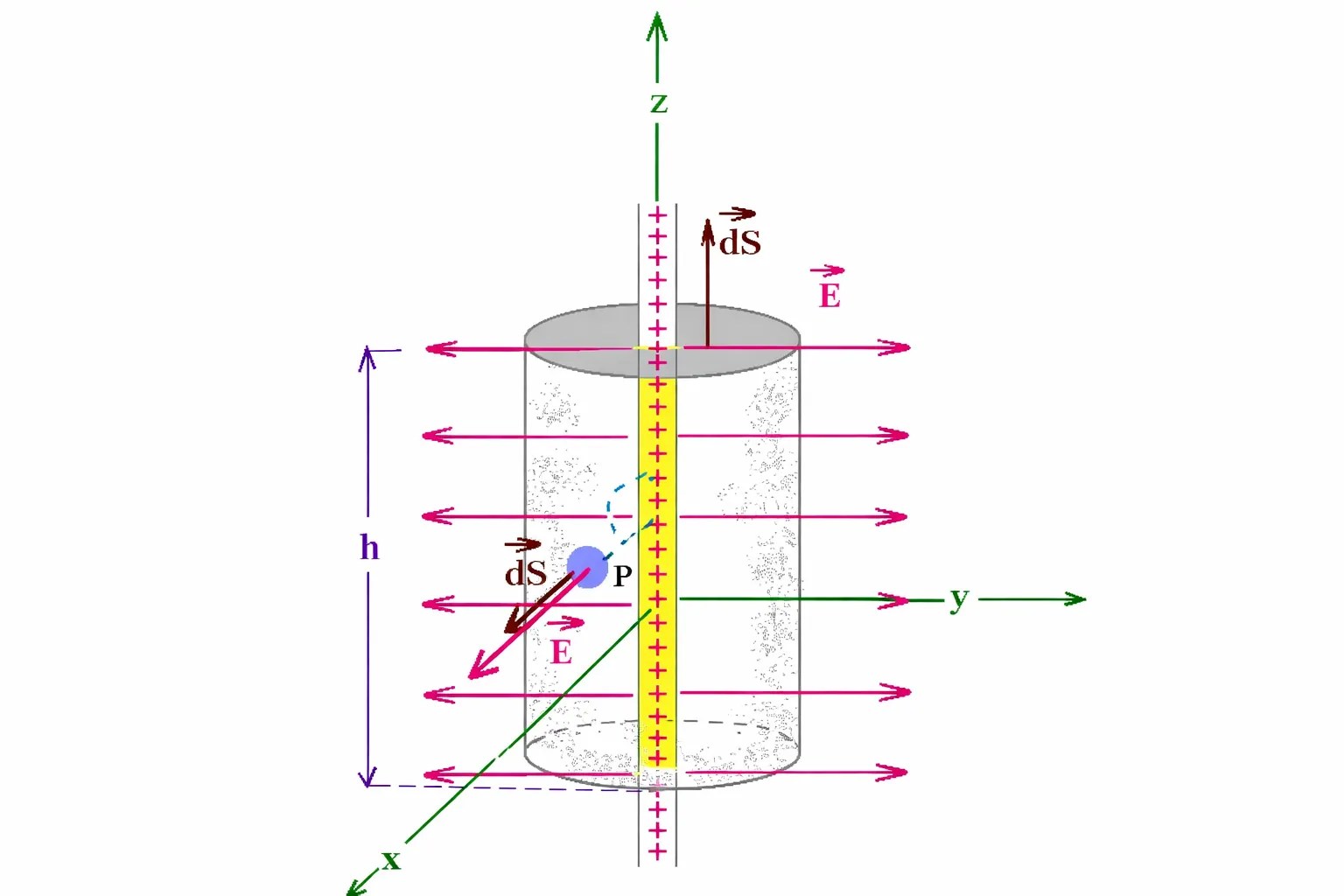 and length
 coaxial with the wire. Enclosed charge:
 .
 contributes:
 .


 )
5 Marks
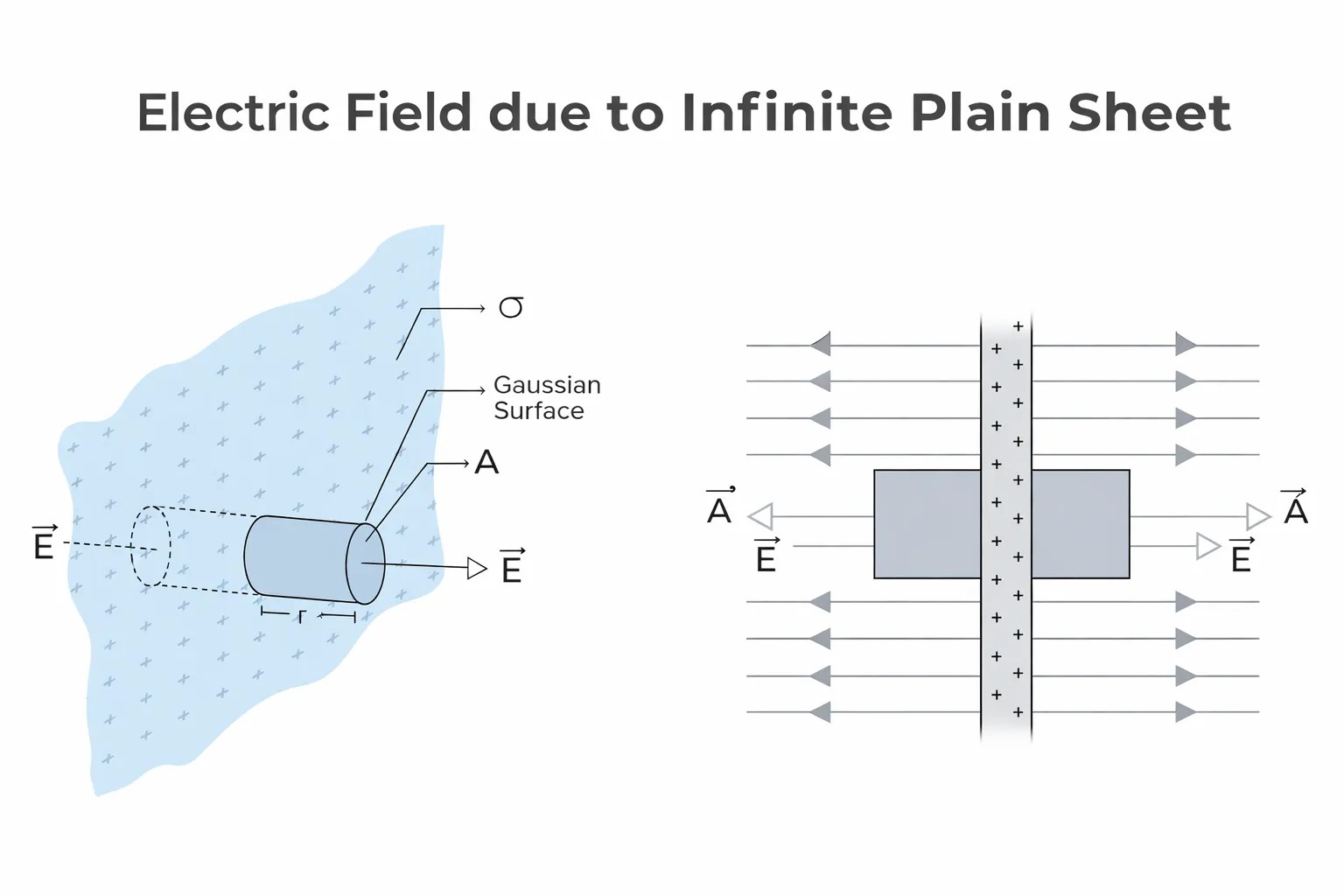
 cutting the sheet. Enclosed charge:
 .
 .

 (independent of distance ).
 )
5 Marks
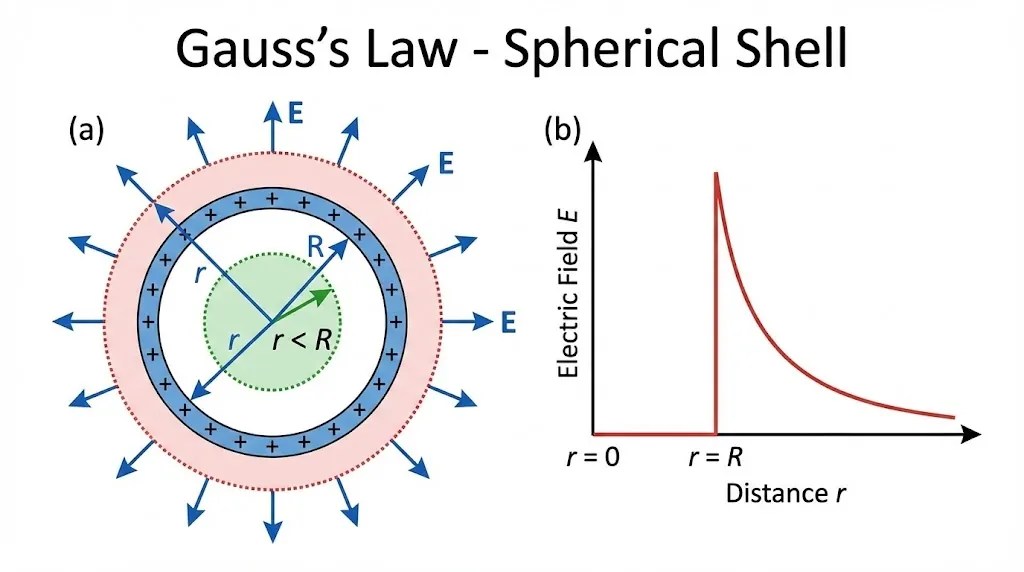
 )
Gaussian sphere radius encloses charge .
From symmetry,
 is radial and constant over surface:


 )
Gaussian sphere encloses no charge:
 . Hence
 everywhere inside the hollow shell.
CBSE Class XII Physics 2026–27 Syllabus Alignment
Chapter: Class XII: Electric Charges and Fields.
Learning focus: Charge, Coulomb’s law, superposition, electric field, electric dipole and Gauss’s law. Keep derivations and applications within the detailed official CBSE topic list; distinguish vector field reasoning from scalar potential.
Use the official CBSE syllabus to verify the exact examinable subtopics, practical requirements and assessment details. Textbook coverage and older question banks may include material outside the current board specification; label such material as enrichment rather than required syllabus content.